
Appelez-nous
:
+8618925446207
Envoyez-nous un courriel
:
marketing@databeyond.com
 English
 Français
 Deutsch
 Español
 日本語
日本語 中文
中文




CES 2026 : Quand l’IA quitte l’écran pour entrer dans le monde physique
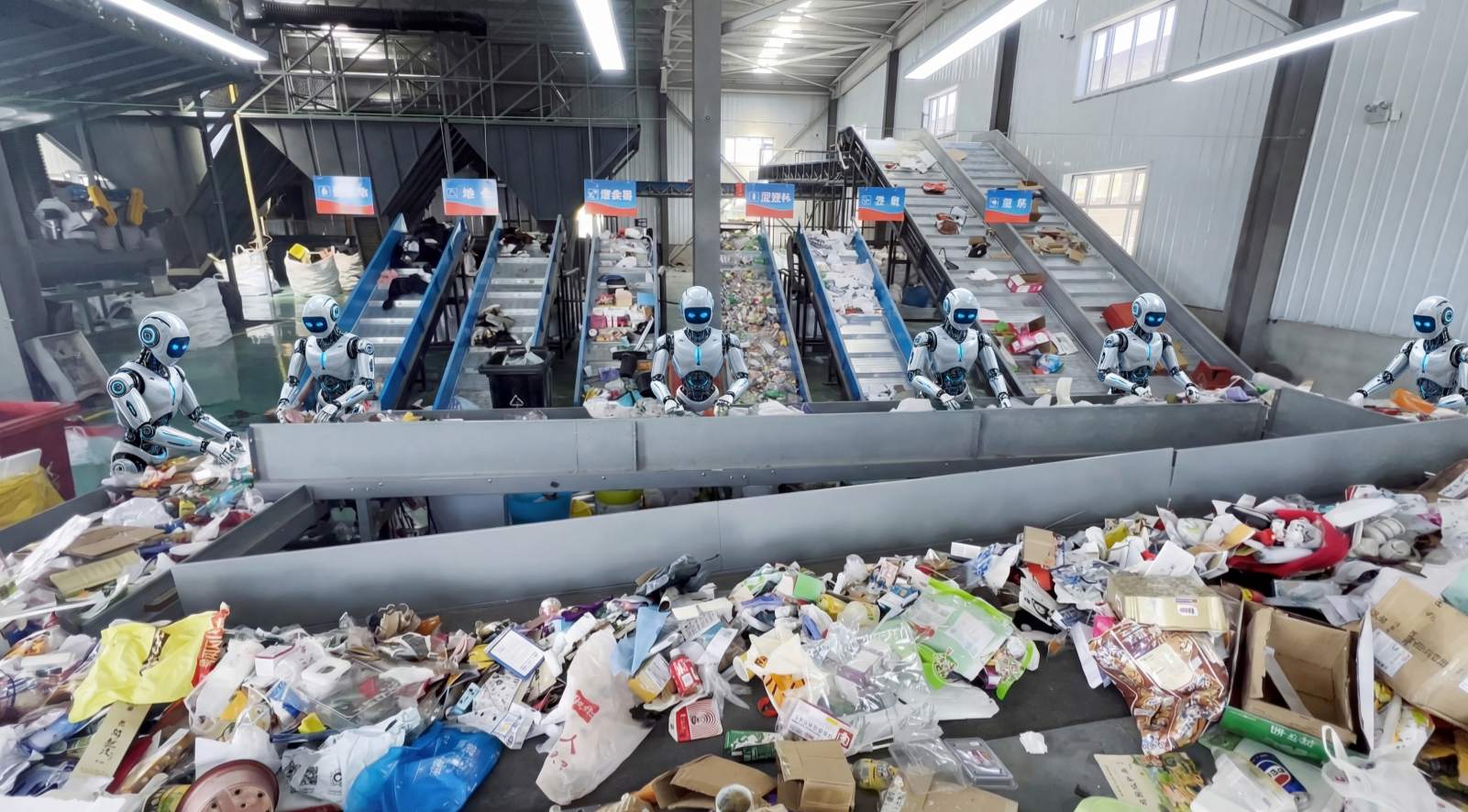
Le CES 2026 a envoyé un signal clair à l'industrie technologique : la valeur ajoutée de l'intelligence artificielle évolue, passant de la « perception et de la génération » à « l'action et l'exécution ». Un large consensus s'est dégagé des discours d'ouverture et des présentations de produits : l'IA n'est plus seulement un outil de perception et de prise de décision ; elle intervient activement dans le monde physique.
Cette tendance indique que l'IA incarnée n'est plus un concept de laboratoire abstrait, mais bien l'avenir inéluctable de l'automatisation industrielle. Dans le domaine du tri industriel, cette évolution marque un tournant décisif entre « l'automatisation traditionnelle » et « l'intelligence de nouvelle génération ». L'intelligence n'est plus isolée ; elle est profondément intégrée aux capteurs, aux actionneurs et aux processus industriels spécifiques, nous faisant passer de l'ère de la perception à l'ère de l'interaction.
Leader des équipements de tri intelligents pour l'industrie du recyclage, DATABEYOND intègre depuis longtemps l'IA au cœur des processus de tri. Grâce à un système « œil-cerveau-main » hautement coordonné, nous accompagnons les industries traditionnelles vers un avenir plus précis, efficace et intelligent.
L'identification est le fondement ; l'exécution est le cercle vertueux de la compétitivité
Dans le tri des ressources recyclables, l'identification est sans conteste la pierre angulaire de la valorisation. Ces dernières années, les technologies de vision basées sur l'IA et les technologies hyperspectrales ont considérablement amélioré la précision de la reconnaissance des matériaux, constituant ainsi le principal moteur de productivité pour l'automatisation. Cependant, à mesure que les applications évoluent vers des domaines plus complexes, le secteur se heurte à une limite pratique : « voir clairement » ne suffit plus.
Les systèmes de tri des déchets recyclables fonctionnent dans des environnements extrêmement hostiles et non structurés : les matériaux ont des formes aléatoires et irrégulières, la contamination est importante et les opérations à haut débit ne laissent pratiquement aucun répit. Dans ces conditions, la véritable valeur ajoutée réside dans la capacité du système à effectuer des actions physiques précises – déplacer, retourner et saisir avec la dextérité d'une main humaine. Cette capacité constitue précisément l'atout final permettant aux entreprises d'améliorer leur compétitivité aujourd'hui.
Pôle technique : Trois instituts de R&D s'attaquent au problème « de l'œil, du cerveau et de la main »
Pour boucler la boucle, DATABEYOND a créé trois grands instituts de recherche à Dongguan, Shenzhen et Hangzhou, axés sur des avancées majeures dans les trois éléments clés pour construire un système complet d’« agent intelligent » :
●Institut de recherche optoélectronique de Dongguan | Œil (Perception de haute précision)Ce système se concentre sur les défis de la détection optique. Il utilise des caméras linéaires 8K ultra-nettes pour une capture extrêmement détaillée de la morphologie des matériaux. Associé à des capteurs hyperspectraux à 256 bandes, il peut identifier plus de 200 types de matériaux grâce à un mode « IA + Hyperspectral + Détection mixte » pour une détection multidimensionnelle.
●Institut de recherche en IA de Shenzhen | Centre de décision intelligente (Cerveau)S'appuyant sur des bases de données et des algorithmes de pointe pour le traitement des déchets solides, le modèle d'IA à grande échelle développé par DATABEYOND repousse les limites traditionnelles. Il permet la conversion de données visuelles 2D/3D et génère d'immenses échantillons virtuels (simulant rotation, pliage et torsion) à fusionner avec des données réelles pour l'entraînement. Ceci réduit considérablement le recours à l'étiquetage manuel tout en améliorant la précision et la généralisation dans des scénarios complexes.
●Institut de recherche en IA incarnée de Hangzhou | Main (Exécution de précision)Ce système se concentre sur les défis liés à l'exécution physique, qu'il s'agisse de trieurs optiques ou de robots embarqués. Reposant sur une architecture technique sous-jacente unifiée, il garantit une synergie parfaite entre les actions de tri et les décisions cognitives, assurant ainsi la transition de l'identification au tri physique.
Opérations synergiques : le « relais conjoint » des trieuses optiques et des robots embarqués
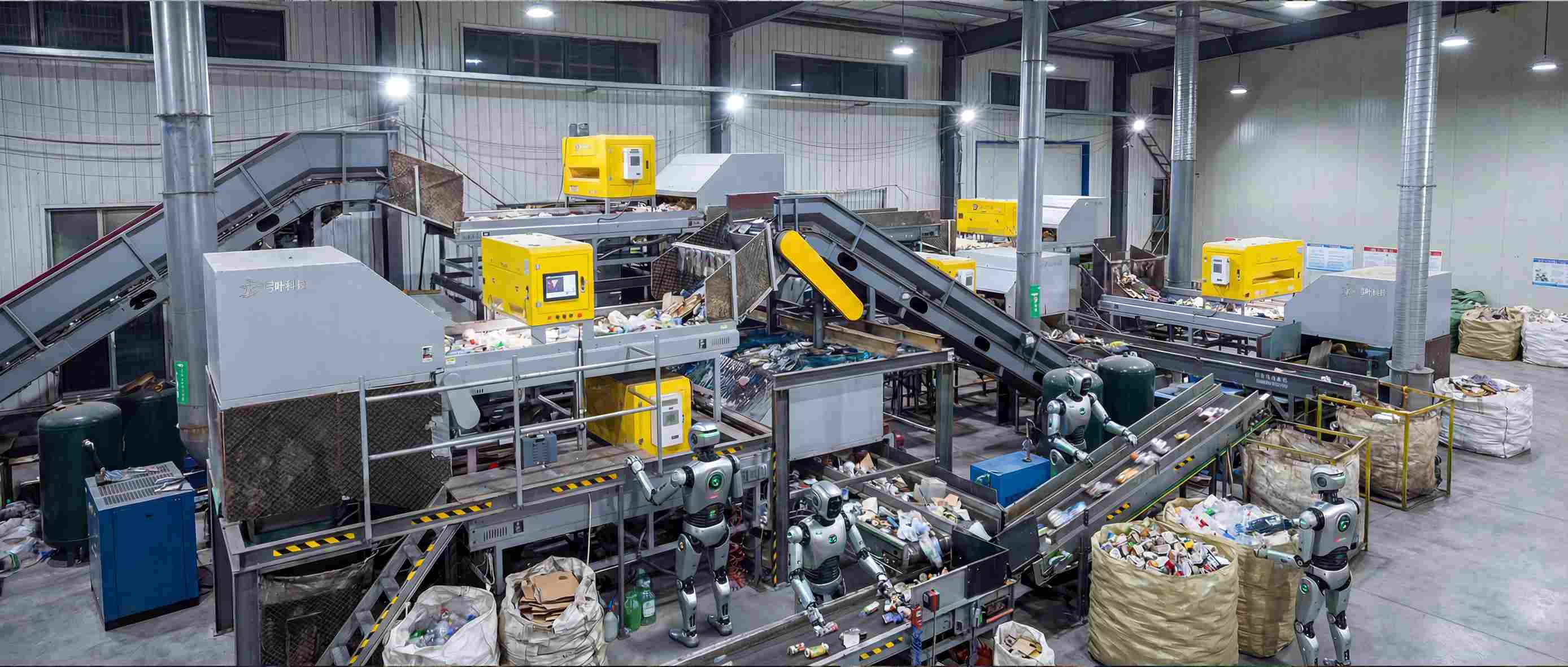
Dans la feuille de route technique de DATABEYOND, l'avenir ne se définit pas par un seul équipement, mais par la profonde synergie entre les trieuses optiques et les robots incarnés – une orchestration parfaite de « l'œil, le cerveau et la main ».
Les trieuses optiques exploitent leur vitesse et leur débit élevés en amont pour identifier et pré-trier rapidement les catégories, les matériaux et les couleurs. Des robots prennent ensuite le relais à différents postes pour gérer les tâches les plus complexes. Qu'il s'agisse de récupérer des articles manquants, de traiter des matériaux enchevêtrés ou d'objets complexes nécessitant une manipulation secondaire précise (comme les déchets textiles ou les plastiques de formes irrégulières), les robots achèvent l'automatisation grâce à une interaction physique flexible. Cette collaboration comble le fossé entre l'identification de masse et le traitement personnalisé, répondant ainsi à divers scénarios de tri et créant un écosystème intelligent complet.
Vers l'usine entièrement automatisée grâce à la numérisation des processus
L'objectif principal de l'introduction de robots incarnés est d'éliminer les points de rupture dans le processus d'automatisation. Pendant longtemps, la complexité des matériaux a rendu impossible le fonctionnement de la fin de la chaîne de production sans intervention humaine. En synchronisant l'IA incarnée avec les trieuses optiques, nous transformons la vision d'une usine entièrement automatisée, fonctionnant 24 h/24 et 7 j/7, en une réalité industrielle tangible.
Dans une telle usine, l'interaction est une donnée. Chaque opération manuelle n'est pas un simple résultat, mais une expérience d'apprentissage profonde. Chaque prise en main précise et chaque retour d'information enrichissent la base de données d'IA de DATABEYOND, permettant au système de s'auto-évaluer et d'évoluer en permanence. Il s'agit de bien plus qu'une simple chaîne de production : c'est un nouveau modèle de production numérique en boucle fermée, piloté par les données.
Remodeler la structure industrielle et la valeur sociale
La synergie entre l'IA embarquée et les technologies d'identification marque l'aboutissement de l'évolution des systèmes de tri, passant des « dispositifs expérimentaux » aux « infrastructures industrielles ». La valeur sociale de cette évolution dépasse largement les seuls gains de productivité.
Pour les entreprises, cela se traduit par une efficacité opérationnelle optimale, une pureté stable et des risques opérationnels réduits, libérant ainsi les gestionnaires des incertitudes liées aux processus à forte intensité de main-d'œuvre. Pour les individus, l'objectif de l'IA incarnée est de transformer le travail : libérer les humains des environnements pénibles, mécaniques et exigeants et les réorienter vers des rôles à plus forte valeur ajoutée dans l'orchestration des systèmes et la prise de décisions stratégiques.
DATABEYOND s'engage à redéfinir les normes des infrastructures industrielles de demain en restructurant le fonctionnement du secteur du recyclage. En confiant le traitement de la matière aux machines et la création de valeur par l'information, nous nous rapprochons plus que jamais d'un avenir industriel entièrement autonome, efficace et propre.
 IPv6 RÉSEAU PRIS EN CHARGE
Laisser un message
Numériser vers Wechat :

Numériser vers WhatsApp :