
Appelez-nous
:
+8618925446207
Envoyez-nous un courriel
:
marketing@databeyond.com
 English
 Français
 Deutsch
 Español
 日本語
日本語 中文
中文




Sous l’impulsion de l’économie circulaire et des objectifs de développement durable (ODD) mondiaux, le secteur de la gestion des déchets solides municipaux est en pleine transition, passant de « l’incinération et la mise en décharge » à « la réduction des déchets et la valorisation des ressources ». Alors que le zéro déchet en décharge fait consensus à l’échelle mondiale, le traitement efficace des déchets solides municipaux mixtes est devenu un indicateur clé de la gouvernance environnementale urbaine.
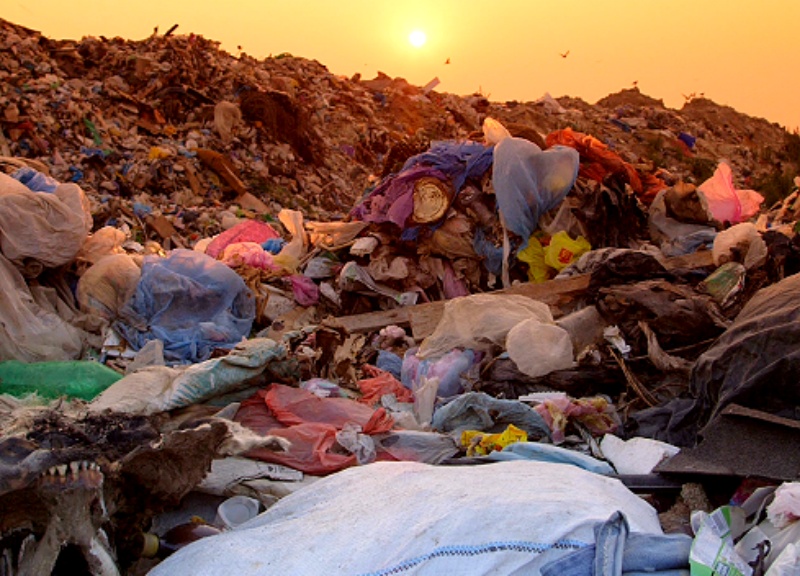
I. Paysage mondial : Le passage de l'élimination passive à l'économie circulaire active
Le modèle de traitement des déchets solides municipaux mixtes a évolué, passant des méthodes d'élimination à grande échelle et inoffensives de l'ère industrielle (incinération + mise en décharge) aux systèmes intelligents de valorisation des ressources à chaîne complète de l'ère de la civilisation écologique.
1. Parcours de soins dans différentes économies
● Pays leaders (tels que l'Allemagne, l'Autriche et le Japon) :Grâce à des systèmes de classification des déchets performants et à des technologies de recyclage avancées, ces pays affichent des taux de recyclage parmi les plus élevés au monde, avec des taux d'enfouissement généralement inférieurs à 10 %.
●Économies émergentes et matures (telles que la Chine, les États-Unis et certaines régions d’Europe) :Bien qu’un cadre axé sur « l’incinération comme solution principale, la mise en décharge comme solution de secours » ait été établi, la valorisation des ressources recyclables de faible valeur se heurte encore à des obstacles majeurs en raison des coûts de tri élevés et de la complexité opérationnelle.
● Défis de la gouvernance mondiale :Dans des régions comme l'Asie du Sud-Est et l'Afrique, plus de 90 % des déchets mixtes ne sont toujours pas correctement gérés, ce qui met en évidence une forte polarisation des capacités de gouvernance des déchets.
2. Politiques internationales et études de cas de marché
●Union européenne (UE)En vertu de la directive-cadre relative aux déchets, les États membres de l'UE sont tenus de réduire leurs taux de mise en décharge à moins de 10 % d'ici 2035.
●Région de Hong Kong :Le Département de la protection de l'environnement a mis en place un système de tri des déchets basé sur l'intelligence artificielle dans l'ouest des Nouveaux Territoires. Ce système, qui fonctionne de manière stable depuis plus de trois ans, utilise la technologie DATABEYOND pour trier avec précision 19 catégories de matériaux issus de flux de déchets mixtes.
●Normes internationales :De plus en plus de projets à l'étranger (notamment des projets mis en œuvre en Italie, en Russie et au Japon) mettent l'accent sur les certifications FDA (Food and Drug Administration américaine) ou EFSA (Autorité européenne de sécurité des aliments) afin de garantir la traçabilité des matériaux recyclés pour les applications de qualité alimentaire.
II. Technologies clés : Lever l'obstacle de la valorisation des déchets à faible valeur
DATABEYOND fournit un soutien systématique à la réduction des déchets et à la récupération des ressources des déchets solides municipaux mixtes grâce à son approche de fusion IA + multi-capteurs.
1. Imagerie spectrale par balayage linéaire vs. balayage ponctuel traditionnel
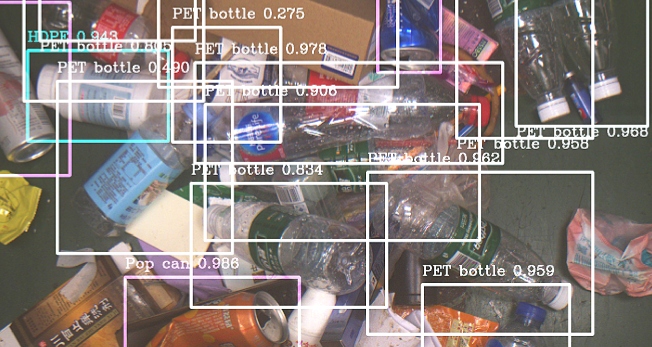
Les technologies traditionnelles rencontrent souvent des difficultés dans les environnements complexes de déchets mixtes en raison des fortes pertes de lumière par réfraction et de leur précision limitée. Le capteur hyperspectral à 256 bandes développé par DATABEYOND dispose de 640 points de mesure et d'une résolution spectrale ultra-élevée, permettant l'identification précise de plus de 200 types de matériaux, dont le PET, le PP, le PEHD, le PVC, le nylon et bien d'autres.
2. Modèles de base de données d'IA et bases de données massives sur les déchets
Pour les emballages souples, les films légers et autres matériaux facilement pliables, susceptibles d'être contaminés et de formes très variables, DATABEYOND a développé une base de données exclusive sur les déchets solides et a exploité l'apprentissage profond avec des données réelles et synthétiques. Cette approche surmonte les limitations des méthodes d'apprentissage traditionnelles basées sur l'annotation et porte la précision de la reconnaissance à plus de 99,6 %.
3. Solutions de fusion multi-capteurs
● IA + Capteur hyperspectral (SPEC) :Le capteur hyperspectral à 256 bandes identifie avec précision des centaines de types de matériaux, notamment PP, PE, PC, PVC, PMMA, ABS, PBT, PPO, PS, PPE et bien d'autres.
● IA + Capteur de fluorescence (FLUO) :Élimine les bouteilles périmées, les bouteilles fluorescentes et les bouteilles fortement contaminées afin de garantir la qualité des matériaux recyclés.
● IA + Capteur spectral de barrière (BARRIER) :Identifie et élimine spécifiquement les bouteilles contenant des additifs barrières, résolvant ainsi le problème de la contamination excessive par des particules jaunes à la source.
● IA + Capteur de métaux (METAL) :Identifie et élimine spécifiquement les impuretés métalliques afin de garantir la qualité du produit final.
III. Valeur du système : synergie entre les avantages économiques et environnementaux
La solution de traitement des déchets solides municipaux mixtes de DATABEYOND, couvrant l'ensemble de la chaîne, démontre une applicabilité mondiale significative selon les dimensions suivantes :
● Objectifs de réduction des déchets : Grâce à un tri en amont de haute précision, le système peut atteindre une réduction à la source de 25 % à 35 %, réduisant considérablement la pression sur les systèmes d'incinération et de mise en décharge en aval.
●Durabilité économique : Dans les projets urbains de taille moyenne, les revenus provenant de la vente de ressources recyclées, combinés à la réduction des coûts d'élimination, peuvent généralement compenser l'investissement en équipement en 3 à 5 ans, permettant ainsi d'atteindre le seuil de rentabilité financière.
●Contribution environnementale significative :Chaque tonne de déchets mixtes détournée de l'incinération peut réduire d'environ 0,5 tonne les émissions équivalentes en CO₂, contribuant directement aux objectifs gouvernementaux de réduction des émissions de carbone.
● Efficacité de tri extrême :Cette solution remplace le tri manuel, une tâche fastidieuse, par des opérations standardisées fonctionnant 24 h/24 et 7 j/7 grâce à l'IA. Dans les pays développés où le coût du travail est extrêmement élevé et la gestion des effectifs complexe, les équipements de tri basés sur l'IA offrent une capacité opérationnelle stable et continue.
IV. Réplication interrégionale et tendances futures
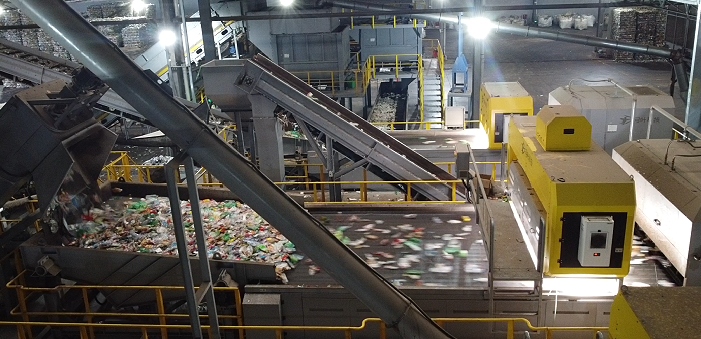
Les solutions de DATABEYOND ont déjà été déployées avec succès en Russie, au Japon, en Corée du Sud, en Italie, en Asie du Sud-Est et dans d'autres régions. Pour les centres de tri à l'étranger, où les matériaux sont relativement plus propres mais les volumes de traitement nettement plus importants, DATABEYOND a mis en place un système entièrement automatisé en boucle fermée, depuis le tri grossier et fin jusqu'au contrôle qualité final, grâce à la coordination de trieurs optiques à intelligence artificielle de grande envergure et de robots intelligents embarqués.
L’industrie mondiale du traitement des déchets solides municipaux mixtes évolue progressivement vers le « zéro déchet en décharge » et la « récupération maximale des ressources ». DATABEYOND continuera de stimuler l’innovation technologique pour accélérer la transition de l’industrie mondiale du recyclage vers un avenir intelligent et numérisé.
 IPv6 RÉSEAU PRIS EN CHARGE
Laisser un message
Numériser vers Wechat :

Numériser vers WhatsApp :