
Appelez-nous
:
+8618925446207
Envoyez-nous un courriel
:
marketing@databeyond.com
 English
 Français
 Deutsch
 Español
 日本語
日本語 中文
中文




La crise cachée de la circulation des fibres
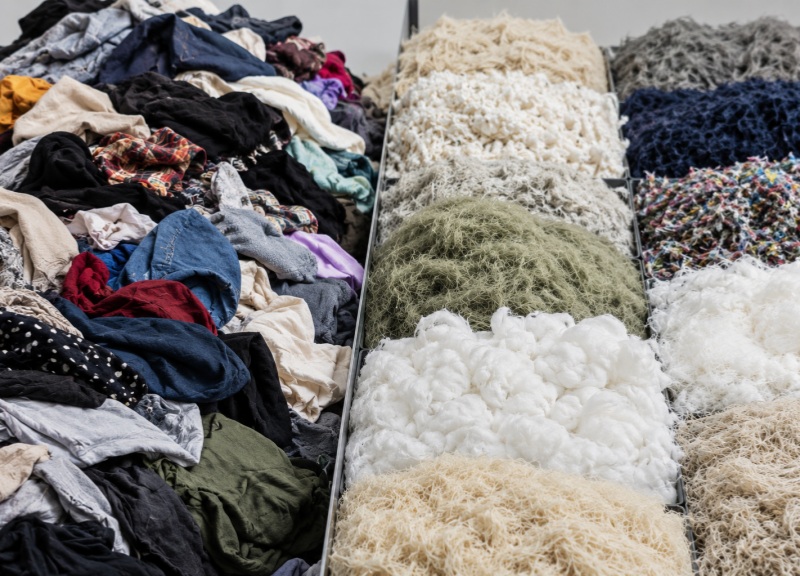
L'industrie textile mondiale est confrontée à une réalité critique : alors que le monde produit chaque année 120 millions de tonnes de déchets textiles, moins de 1 % sont recyclés en circuit fermé pour la fabrication de vêtements ou de tissus. La plupart des déchets textiles finissent dans des décharges, sont incinérés ou transformés en matériaux de faible valeur comme les chiffons et le rembourrage, qui n'ont que peu de valeur économique et contribuent à la pollution environnementale.
Par ailleurs, la pression réglementaire internationale s'intensifie. Le règlement européen ESPR (Règlement sur l'écoconception des produits durables) entrera officiellement en vigueur en 2026, interdisant la destruction et la mise en décharge des textiles invendus ou usagés. Partout en Europe et au Royaume-Uni, les systèmes de responsabilité élargie des producteurs (REP) sont pleinement mis en œuvre. Les marques de vêtements doivent désormais assumer la responsabilité du recyclage, du tri et du traitement régénératif de leurs produits, sous peine de lourdes amendes et de risques de non-conformité en cas de non-respect des normes de pureté.
IA + Perception hyperspectrale : Redéfinir les normes de pureté
Le principal obstacle dans ce secteur demeure l'incapacité à trier les matériaux avec un haut degré de pureté. Le tri manuel repose sur un retour d'information visuel et tactile, limité à l'identification basique du coton et du polyester. L'humain peine à distinguer les vêtements foncés, les articles sales, les tissus imprimés ou les mélanges complexes, ce qui entraîne une faible pureté, une cadence de traitement lente et des coûts de main-d'œuvre prohibitifs, empêchant ainsi de respecter les normes de matières premières exigées par les usines et les marques de recyclage internationales.
DataBeyond ne s'appuie pas sur les méthodes de tri traditionnelles. Nous utilisons plutôt une fusion d'intelligence artificielle et d'imagerie hyperspectrale à 256 bandes pour résoudre les problèmes de tri concrets :
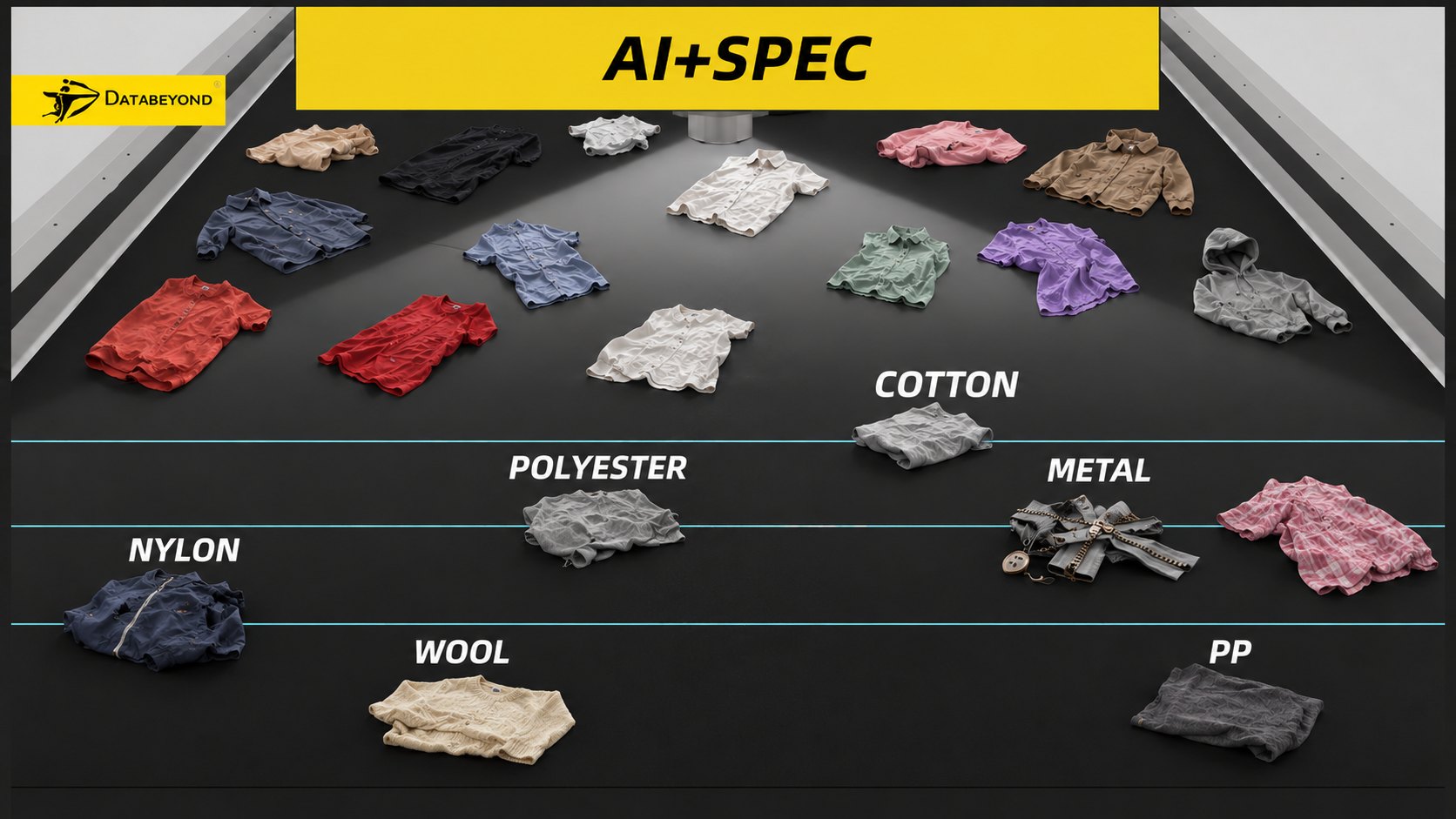
Imagerie hyperspectrale à 1,256 bandes 【SPEC】 Alors que les appareils photo classiques ne capturent que la couleur et l'apparence, l'équipement DataBeyond collecte des données sur 256 bandes spectrales du proche infrarouge. Ceci permet d'identifier les couleurs, les taches, les imprimés et l'usure, tout en déterminant avec précision la composition des fibres. Le système distingue avec fiabilité le polyester, le coton, la laine, le nylon et l'élasthanne, et peut identifier avec précision les mélanges (par exemple, polycoton, nylon-élasthanne), les tissus multicouches et les impuretés telles que les boutons, les fermetures éclair ou les fils métalliques en vue de leur retrait.
2. Algorithmes d'IA d'apprentissage profond Nos modèles sont entraînés sur des millions de points de données réels provenant de vêtements usagés. La machine reconnaît différents styles, doublures, tissus enduits et matières spéciales propres à chaque marque. Tandis que les textiles défilent sur des convoyeurs à grande vitesse, l'IA les identifie et émet des ordres de tri en quelques millisecondes, fonctionnant 24 h/24 et 7 j/7 sans la fatigue ni les erreurs subjectives liées au travail humain.
3. Système d'éjection pneumatique haute fréquence après identificationDes vannes à air comprimé haute pression réagissent en quelques millisecondes pour injecter avec précision les matériaux spécifiques dans les conteneurs prévus à cet effet. Il en résulte une pureté globale stable supérieure à 90 %, la pureté de chaque matériau pouvant atteindre 98 %. Ces produits peuvent être directement acheminés vers des usines de recyclage physique pour l'ouverture des fibres ou vers des usines de recyclage chimique pour la dépolymérisation, répondant ainsi pleinement aux normes d'entrée des matières premières recyclées en Europe et en Amérique du Nord.
Transformer la conformité en profit
Pour les exploitants d'usines de recyclage, la transition vers les lignes de production automatisées de DataBeyond remodèle leur modèle économique :
●Opérations standardisées : La qualité de la production n'est plus dictée par la fatigue des travailleurs ni par leur niveau de compétence.
●Primes de marché : Les fibres recyclées de haute pureté (comme le polyester blanc pur) se vendent à des prix nettement supérieurs sur le marché par rapport aux balles de fibres mélangées.
●Préparer l’avenir : Face au durcissement des réglementations mondiales, seules les entreprises disposant de données de tri numériques et traçables resteront compétitives dans la chaîne d'approvisionnement verte.
L'avenir est automatisé
La transition vers une économie circulaire du textile n'est plus un luxe écologique, mais une nécessité logistique. DataBeyond s'engage à donner aux recycleurs du monde entier les moyens de combler le fossé entre les « montagnes de déchets » et les « matières premières textiles de haute qualité ».
 IPv6 RÉSEAU PRIS EN CHARGE
Laisser un message
Numériser vers Wechat :

Numériser vers WhatsApp :